Right. Kefir or kombucha. It's the question I get asked most in the taproom, just after "where's the loo?" and just before "are you the kombucha man off TikTok?" Yes. Sorry.
They're both fizzy. They're both fermented. They both sound like something a man with a man bun would order in Shoreditch. But they're not the same drink, and knowing the difference means you'll actually enjoy what you buy.
So let's sort it. No lab coat. No gong bath. Just a bloke in Otley who's spent far too long thinking about bacteria.
The short answer
Kombucha is sweet tea fermented with a SCOBY, a culture of bacteria and yeast. It's tangy, a bit vinegary, has a little caffeine from the tea, and takes one to two weeks to make.
Kefir comes in two types. Milk kefir is a tangy, drinkable fermented milk, a bit like runny yoghurt. Water kefir is sugar water or juice fermented with water kefir grains. It's lighter, fruitier, less sour than kombucha and usually caffeine-free.
All three are live, fermented drinks. None of them is a magic potion. And you don't have to pick a side. This isn't Highlander. There doesn't have to be only one.
Kefir vs kombucha at a glance

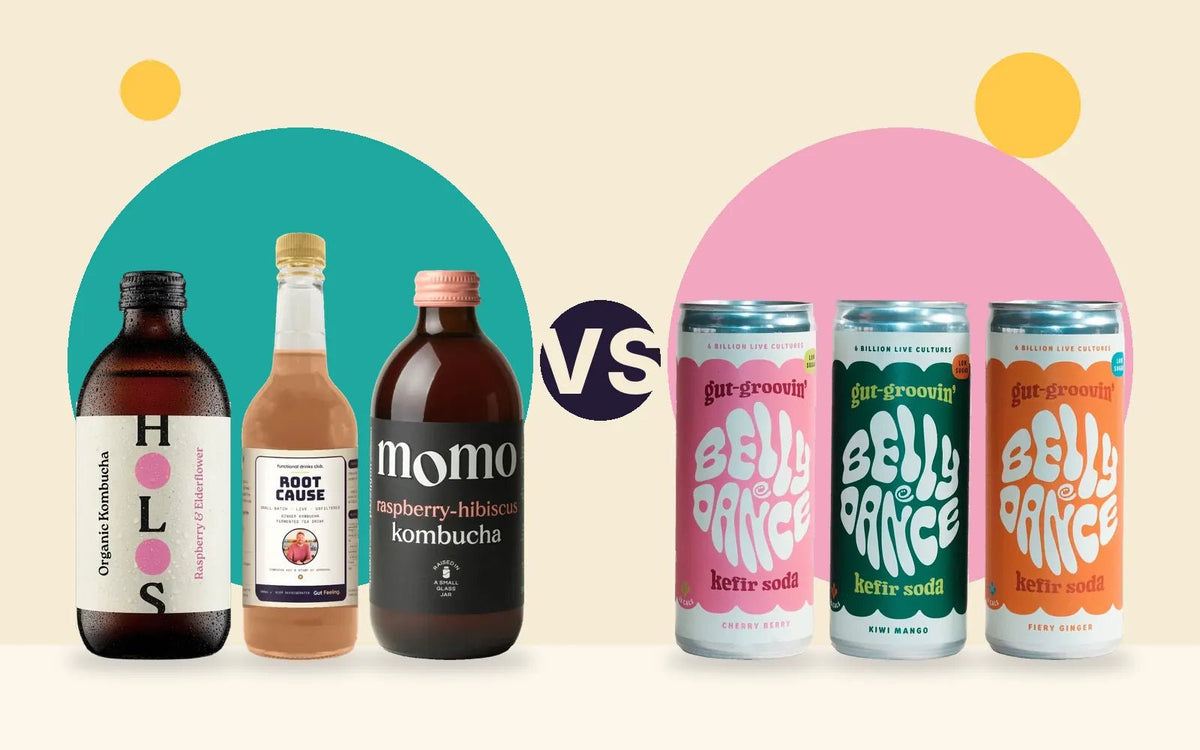
Left: kombucha. Right: water kefir. Both fizzy, both live, neither one a magic potion.
Made from: kombucha is sweet tea. Milk kefir is milk. Water kefir is sugar water or fruit juice.
Fermented with: kombucha uses a SCOBY. Milk kefir and water kefir use "grains", which aren't grains at all (more on that in a minute).
Fermenting time: kombucha takes 7 to 14 days. Milk kefir takes 10 to 24 hours. Water kefir takes a day or two.
Taste: kombucha is tangy and sharp. Milk kefir is creamy and sour. Water kefir is light, fruity and softer.
Caffeine: kombucha has a little. Kefir usually has none.
Dairy: only milk kefir.
What is kombucha?
Kombucha starts life as a cup of sweet tea. Then you add a SCOBY, which stands for Symbiotic Culture Of Bacteria and Yeast. It looks like a beige pancake that's given up on its dreams.
The yeast eats the sugar and makes a bit of gas and alcohol. The bacteria then eat that and turn it into the acids that give kombucha its tang. One makes the mess, the other tidies up. Like every flat share I ever lived in, except this one works.
Because it's made from tea, kombucha keeps a little caffeine. Not espresso levels. More "polite nudge" than "Red Bull at a stag do".
If you fancy making it yourself, my guide to how to make kombucha at home walks you through it, slime and all.
What is kefir?
Kefir is the one people pronounce wrong. It's "kuh-FEER", not "KEE-fur". Although in Yorkshire I've heard both, plus a few I can't print.
Both types use kefir "grains". They're not grains. There's no wheat, no oats and no muesli. They're little rubbery clumps of bacteria and yeast held together by the stuff they make themselves. If a cauliflower and a jelly baby had a very small baby, that's milk kefir grains.
Milk kefir is milk fermented with those grains for about a day. It comes out thick, tangy and a bit fizzy on the tongue. ZOE describes it as having a wider range of microbes than typical live yoghurt, and some evidence of benefits, though most of the research is still small.
Water kefir uses a different set of grains, called tibicos, which look like tiny see-through crystals. They go into sugar water or juice for a day or two. What comes out is a light, fizzy, dairy-free soda. It's kombucha's chilled-out little sister. Less tang, no tea, no caffeine.
It's the newest thing in our fridge, and you'll find it in our water kefir collection.
How do they taste?
Kombucha is sharp, tangy and grown-up. Think dry cider meets apple cider vinegar meets a sparkling iced tea. Some people love that bite straight away. Some people pull a face like they've licked a battery. Give it three goes before you decide.
Water kefir is softer and rounder. It tastes like a fruity soda that's been on a retreat, with a gentle sourness right at the end. If you find kombucha too vinegary, this is your way in.
Milk kefir is creamy, sour and thick. Great in a smoothie or on granola. Less great if you were expecting lemonade.
What does the science actually say?
Here's the honest bit, because I'd rather you trusted me than bought a crate on a promise.
The study everyone quotes is from Stanford in 2021. Thirty-six healthy adults were split into two groups for 10 weeks. One group ate more fibre. The other worked up to about six servings a day of fermented foods, including kefir, kombucha, yoghurt and kimchi.
The fermented food group ended up with a more diverse gut microbiome. Levels of 19 inflammatory proteins in their blood went down, too. The fibre group didn't see those changes over the 10 weeks. You can read the Stanford write-up of the study yourself.
Now the caveats. It was small. It mixed lots of fermented foods together, so it can't tell you whether kefir beat kombucha. And six servings a day is a lot. That's not a glass with lunch. That's a lifestyle choice. (Sorry. That's a banned word. I'll put a pound in the jar.)
On their own, the human evidence is still thin. ZOE says there's very little evidence in humans for kombucha's health benefits so far. Most of the exciting stuff comes from animal and lab studies. Milk kefir has a few more human trials, but they're small. Water kefir is the least studied of the lot.
So no, none of these will cure anything. Anyone who tells you otherwise is probably selling crystals, and the crystals are probably from Amazon.
What the research does keep pointing at is variety. ZOE's Tim Spector recommends small amounts of different fermented foods every day, rather than a big glug of one thing now and then. That's exactly why I don't pick sides.
Kefir or kombucha: which should you drink?
Here's my completely unscientific, very Yorkshire guide.
Pick kombucha if you like tangy, punchy drinks, you're swapping out wine or beer, or you want a little lift in the afternoon. It's the most grown-up of the bunch, and the one with the most flavours. We stock over 60 of them, which is either impressive or a cry for help.
Pick water kefir if kombucha is too sharp for you, you're avoiding caffeine, or you want something lighter and fruitier. It's also the easiest sell to people who say "I don't like healthy drinks". Don't tell them. Just hand them a can.
Pick milk kefir if you're happy with dairy and want something that's half drink, half breakfast. It's brilliant blitzed with frozen berries. We sell it in the taproom, but we don't post it, because warm milk in the Royal Mail is a crime against everyone.
Or have both. I have something fermented every single day. Usually kombucha, sometimes water kefir, the odd spoon of kimchi or kraut when I remember I'm a grown man who owns a fridge. I used to get bloating, gas and stomach cramps. These days they're a distant memory, like Blockbuster or dial-up internet.
That's my story, not a promise. But it's why I bang on about this stuff.
Is the sugar a problem?
Both start with sugar, and that panics people. Put your pearls down. The cultures eat most of it during fermentation. It's their whole job. It's the only hobby they've got.
How much is left depends on the drink. Our Belly Dance water kefirs range from 0.1g to 1.9g of sugar per 100ml. Plenty of kombuchas sit around 2g to 4g. Either way, it's a fraction of a can of cola. Check the label, though. Some big-brand "kombucha" is basically pop with a SCOBY's business card in it.
Do they contain alcohol?
A tiny trace, yes, because fermentation makes a little alcohol along the way. In the UK, anything over 0.5% ABV counts as an alcoholic drink, so the kombucha and kefir we sell stays under that. The Spicy Margarita water kefir says zero alcohol right on the can.
Homemade batches can creep higher, especially if you leave them warm or do a long second ferment. My guide to kombucha second fermentation covers how to keep it low.
Try them for yourself
Enough reading. Here's where I'd start. Every one of these counts towards the box deal, so mix kombucha and kefir however you like. Any 6 gets you 5% off, 12 gets 10%, and 24 gets 15%.
Kombucha to start with:


Water kefir to start with:


See the full range in our water kefir collection and our raw kombucha range.
The serious bit
If you're new to fermented drinks, start small. A small glass a day is plenty at first. Some people get a bit of extra wind or bloating for the first few days while their gut gets used to it. Ironic, I know.
If you're pregnant, have a weakened immune system or have just had surgery, speak to your GP or midwife first. The same goes if you've got a medical condition or take regular medication. And if you've got ongoing gut symptoms, don't just drink your way through them. Get them checked. Fermented drinks are a nice habit, not a diagnosis.
Kombucha Kev, Functional Drinks Club