Right. You've made kombucha. Your SCOBY is thriving, your jar is tangy and you've told everyone at work. Some of them have started avoiding you. That's normal.
Now for the fun bit. The first ferment makes kombucha. The second ferment makes it fizzy.
It's where you add fruit, ginger or juice, seal it in a bottle and let the bubbles build. Done right, you get a proper fizzy drink. Done wrong, you get a scene from Ghostbusters on your kitchen ceiling. Who you gonna call? A decorator.
The short answer
Pour your finished kombucha into strong, sealable bottles, add 10 to 20% fruit or juice, and leave them at room temperature for 1 to 3 days. Open one a little each day to release the pressure. When it's fizzy enough, put them all in the fridge.
That's it. The rest is detail, and the detail is what stops the bottles going bang.
Before you start
You need a finished first ferment. That's plain kombucha that tastes tangy with a hint of sweetness. If you're not there yet, start with my guide to how to make kombucha at home. I'll wait. I've got tea.
Keep your SCOBY and 200 to 300ml of liquid back for the next batch. Everything else can be bottled. The SCOBY doesn't come to the party. It's the designated driver.
What you need

Swing-tops: yes. Funnel: yes. That flimsy plastic bottle: absolutely not.
- Swing-top glass bottles made for fizzy drinks. The thick ones with a rubber seal and a metal clip. The kind a Victorian chemist would trust.
- A funnel, unless you enjoy sticky worktops and sticky socks.
- Your flavourings. Fresh or frozen fruit, juice, ginger, herbs or spices.
- A sieve for when you serve it. Nobody wants a raspberry pip in their teeth during a compliment.
Don't use thin decorative bottles, old jam jars or anything with a crack or chip. They're not built for pressure, and pressure is the whole point. That pretty bottle from TK Maxx is for show, like a decorative cushion or a gym membership.
How to do a second fermentation
- Add your flavourings to the bottles. Aim for 10 to 20% of the bottle. For a 500ml bottle, that's about 50 to 100ml of juice, or a good handful of chopped fruit.
- Fill up with kombucha. Leave a gap of 2 to 3cm at the top. That's the bubbles' bedroom. Don't fill it with furniture.
- Seal the bottles and give them a gentle tilt to mix. Gentle. This isn't a cocktail bar in Magaluf.
- Leave them at room temperature, out of the sun, for 1 to 3 days. In a warm kitchen, check after one day.
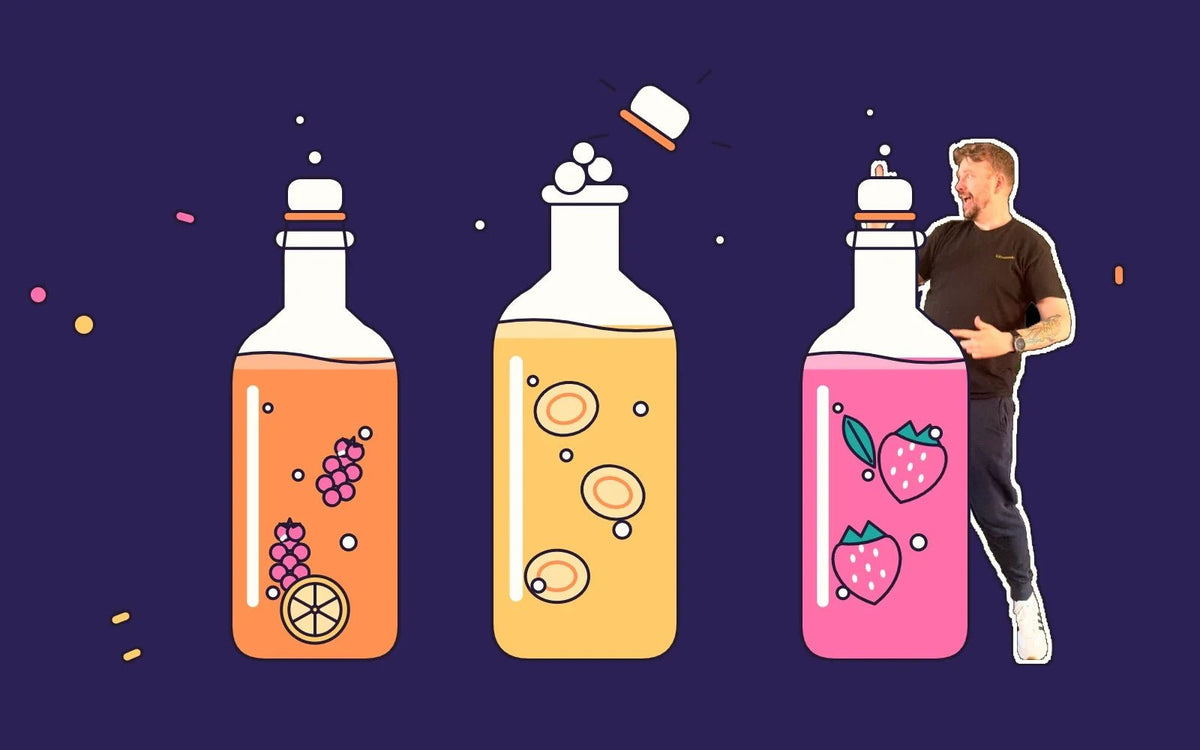
- Burp them once a day. Open the lid briefly over the sink to let some gas out, then close it again. Yes, you're burping a bottle. Like a baby. A baby that could take your eye out.
- Fridge them when they're fizzy enough. The cold slows everything right down. Think of the fridge as the naughty step.
- Strain and serve. Pour through a sieve to catch the fruit bits.
How do you know when it's ready?

Burp it over the sink. Then jump back. Dignity optional.
The easiest trick is to fill one small plastic bottle alongside the glass ones. It's your canary in the coal mine. When you squeeze it and it's rock hard, your glass bottles are fizzy too.
Otherwise, go by the burp. A gentle hiss means it's getting there. A loud pop means it's ready, and it's time for the fridge. A noise like a startled goose means you've waited too long. Fridge. Now.
Why didn't mine get fizzy?
Flat kombucha is the most common second ferment problem. It's deflating. Literally. Usually it's one of these:
- The seal isn't tight. Check the rubber rings on your swing-tops. The gas is escaping like a teenager out of a bedroom window.
- It's too cold. Move it somewhere warmer, like a kitchen cupboard. Yeast hates the cold. Same as me in Otley in February.
- Not enough fruit sugar. The yeast needs something to eat. Try a bit more juice.
- Your first ferment went too long. Very vinegary kombucha has tired yeast. Bottle it a little earlier next time.
- Too much headspace. A big gap at the top means less fizz. Fill a bit higher.
Want to know where the bubbles actually come from? We explain it in are fermented drinks fizzy naturally?
How to stop bottles exploding

No sun. Big fridge. That's the whole safety plan, and me in the fridge is optional.
Right. The serious bit. Clown nose off. A glass bottle full of pressure can shatter, and nobody wants that.
- Use proper pressure-rated bottles. Always.
- Burp them daily while they're out of the fridge.
- Don't leave them out too long. Three days is plenty. In a heatwave, one or two.
- Watch the sugary stuff. Mango, pineapple and grape juice are lively. Check those bottles more often.
- Chill before opening. Cold kombucha holds its gas better, so there's less chance of a fountain.
- Open them over the sink, pointing away from your face. Treat them like a bottle of champagne at a wedding, minus the best man's speech.
Once they're in the fridge, the risk drops right down. But they will keep slowly building pressure, so drink flavoured kombucha within a few days. Clown nose back on.
A quick word on alcohol
The second ferment is where alcohol can creep up. You're giving the yeast fresh sugar in a sealed bottle, and the longer and warmer it sits, the more it makes.
That's why some shop-bought kombuchas have been found to be stronger than their labels say. When Consumer NZ tested supermarket kombucha, one brand came in at 3% or more, which is stronger than some light beers. Not ideal when you've just told your mates you're off the booze.
So keep the second ferment short, keep it cool, and get it in the fridge. If you need to avoid alcohol completely, drink shop-bought kombucha that's been tested instead. There's more in is kombucha alcoholic or not?
What can you flavour it with?
Pretty much anything that's food. Fruit, juice, ginger, herbs, spices and even a few flowers. Not crisps. Someone always asks. Here are my favourite combinations to start with, each making about a litre.
Ginger. The fizz king. Loud, spicy, first on the dance floor. Ginger kombucha recipe.
Raspberry and lemon. Bright, pink and gone in ten minutes. Raspberry and lemon kombucha recipe.
Blueberry. Deep, dark and a bit mysterious. Wears sunglasses indoors. Blueberry kombucha recipe.
Strawberry and basil. Proper summer stuff. Strawberry and basil kombucha recipe.
Mango and lime. Tropical, lively and needs watching like a toddler near a pond. Mango and lime kombucha recipe.
Apple and cinnamon. Autumn in a glass. Comes with its own bobble hat. Apple and cinnamon kombucha recipe.
Cranberry and orange. Christmas, sorted. Cranberry and orange kombucha recipe.
Pineapple and mint. Sharp, fresh and ends the pineapple-on-pizza debate by being somewhere else entirely. Pineapple and mint kombucha recipe.
Can't wait two days?
I get it. Patience isn't for everyone. Veruca Salt wanted it now, and look how she ended up.
Our raw kombucha range has over 60 ready-made flavours from independent UK makers, already fizzy and in the fridge. Or try my own:

Mix any six or more bottles in a build-your-own box and save up to 15%.
The bottom line
Good bottles, 10 to 20% fruit, 1 to 3 days, burp daily, then the fridge. That's a perfect second ferment.
Respect the pressure and you'll get proper fizz every time. Ignore it, and you'll be finding raspberry pips on the ceiling until Easter.
This article is general information, not food safety advice. If a bottle looks or smells wrong, or has mould, don't drink it.