Water kefir. Two words that sound like a spa treatment you'd get talked into in Harrogate. "Would madam like the water kefir wrap with the hot stones?" No. Madam would like a cold drink.
Good news. That's exactly what it is. A cold, fizzy, fruity drink that happens to be fermented and full of live cultures. No wrap. No stones. No woman called Saffron.
Here's everything you need to know, from a man who now has more fermented drinks in his fridge than actual food.
The short answer
Water kefir is a fizzy, dairy-free drink made by fermenting sugar water or fruit juice with water kefir grains for a day or two. The grains are a mix of bacteria and yeast. They eat most of the sugar and turn it into a light, lightly tangy soda with live cultures in it.
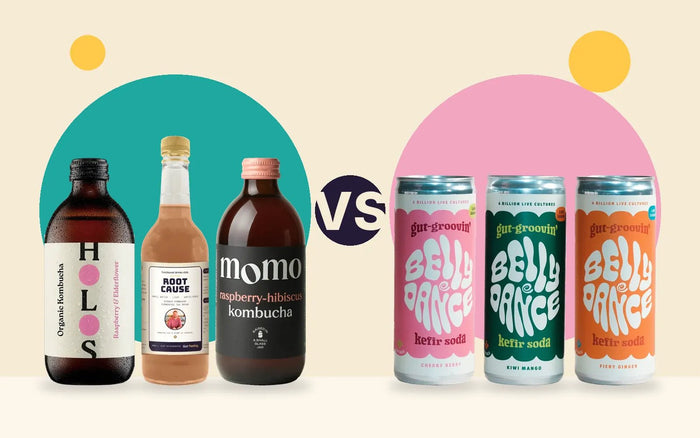
It's lighter and fruitier than kombucha, less sour, and usually caffeine-free, because there's no tea involved. Think of it as kombucha's chilled-out little sister. Belly Dance, who make the range we stock, call it exactly that, and I'm not going to argue with two women who outgrew their kitchens.
What are water kefir grains?
First things first. They're not grains. Whoever named them should be made to explain themselves.
Water kefir grains, also called tibicos, are small, see-through, jelly-like lumps. They look like crushed ice that's started a band. Or the sugar crystals off a Haribo that got ideas above their station.
They're made of a starchy, jelly-like substance that the bacteria build themselves, a bit like a block of flats they live in. Inside are lactic acid bacteria, some acetic acid bacteria and yeasts. Every batch, the grains grow. Feed them well and they multiply, which is how people end up handing out jars of them like it's a pyramid scheme.
They're not the same as milk kefir grains, which are white, rubbery and look like tiny cauliflowers. Different grains, different microbes, different drink. If you want the full head-to-head, read my guide to kefir vs kombucha.
How is water kefir made?
The method is so simple it's almost rude.
- Dissolve sugar in water, or use fruit juice. Belly Dance use organic raw cane sugar and a little green tea extract in their culture, then blend with juice.
- Add the grains and cover the jar.
- Leave it for a day or two at room temperature. The cultures eat most of the sugar and make it lightly fizzy and tangy.
- Strain out the grains to start the next batch.
- Flavour and bottle it for a short second ferment, which builds up the fizz.
Compared to kombucha, which takes one to two weeks, water kefir is fast. It's the Usain Bolt of ferments. Kombucha is more of a long-distance walker in sensible shoes.
What does it taste like?
Like a fruity soda that's grown up a bit. Fresh, light and fizzy, with a gentle sour note at the end that tells you it's alive.
If you've tried kombucha and thought "nice, but this tastes like it could strip paint", water kefir is your drink. It's softer, rounder and much less vinegary. It's kombucha for people who don't want to hear me talk about kombucha. Which, to be fair, is most people I've met at parties.
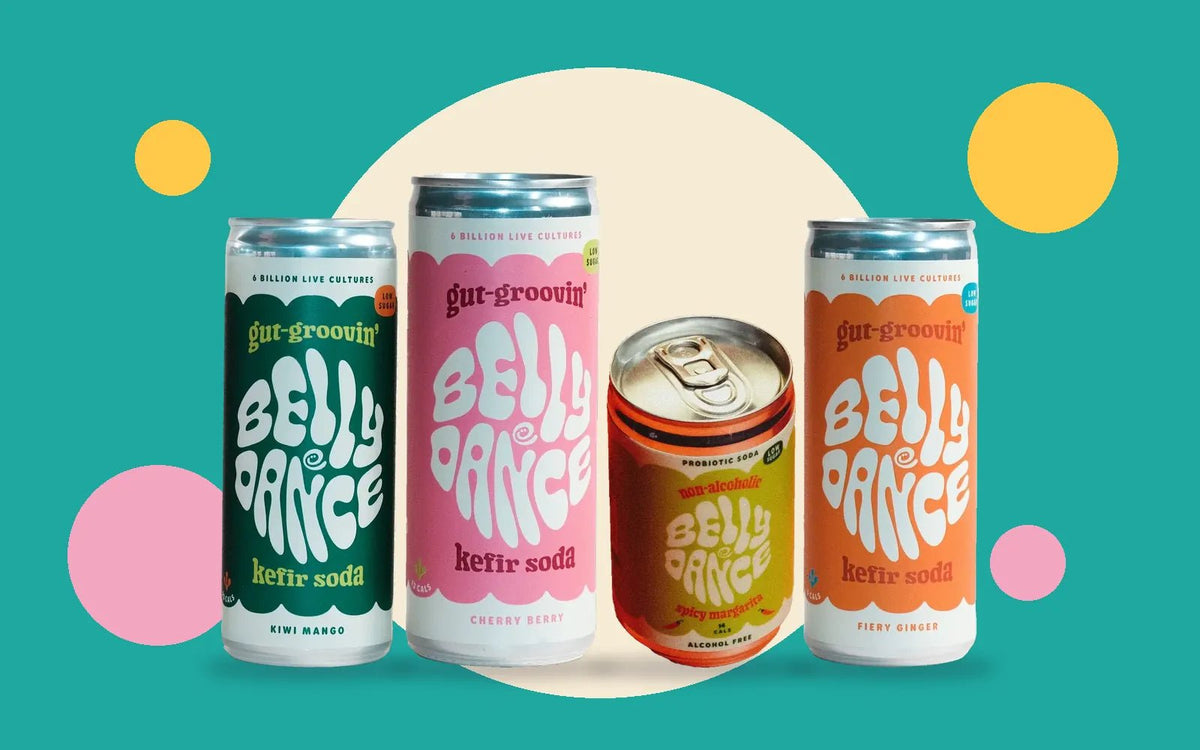
Flavour carries it beautifully, too. Cherry, ginger, tropical fruit, even a lime and chilli margarita. Which brings me to the range.
Is water kefir good for you?
Here's where I keep it honest, because the internet is full of people who'll tell you a fizzy drink fixed their life, their skin and their marriage.
Water kefir contains live cultures, and fermented foods are one of the most interesting areas in gut health right now. A 2021 Stanford study put 36 healthy adults on a diet with more fermented foods, including kefir and kombucha, for 10 weeks. Their gut microbiome got more diverse, and 19 inflammatory markers in their blood went down. You can read the Stanford write-up.
But that study mixed lots of fermented foods together, and it was small. When it comes to water kefir on its own, the evidence in people is still thin. A 2024 review of water kefir research found most of the work so far has been in the lab or in animals, and called for proper human trials.
So what can you say? It's a low-sugar, live, fermented drink you'll actually enjoy, and it's a far better habit than a can of cola. That's enough for me. The rest, we'll find out.
ZOE's advice is to have small amounts of a variety of fermented foods every day. Water kefir is a very easy way to add one more to the mix. As Ferris Bueller nearly said, life moves pretty fast. If you don't stop and ferment once in a while, you could miss it.
Water kefir vs milk kefir
Same surname. Very different personalities.
Milk kefir is fermented milk. It's thick, creamy and sour, a bit like drinkable yoghurt, and it's got protein and calcium from the milk. It's not dairy-free, obviously. It's literally milk.
Water kefir is fermented sugar water or juice. It's thin, fizzy and fruity, and it's dairy-free and vegan. It's what you'd pour at a barbecue. Milk kefir is what you'd pour on your granola. Please don't mix them up at a barbecue.
Meet Belly Dance

Belly Dance in a bucket of ice and disco balls. As all drinks should be served.
The water kefir we stock is from Belly Dance, made in the UK by Hannah and Harriet. They met teaching yoga in East London. Hannah was studying nutrition, Harriet's newborn had just been prescribed antibiotics, and they both fell head first down the gut microbiome rabbit hole.
They couldn't find a fermented drink they actually wanted to drink. So they started brewing water kefir at home and delivering Kilner jars to friends. Eventually, their kitchens gave up. Enter, Belly Dance.
The cans are low in sugar, vegan, caffeine-free, with no sweeteners and no preservatives. And they look like a 70s disco, which is the only acceptable way for a can to look.


Shop the whole range in our water kefir collection. Every can counts towards the box deal: any 6 for 5% off, 12 for 10% and 24 for 15%. Mix them in with your raw kombucha.
How to drink water kefir
Ice cold. Straight from the fridge, it's at its best.
Over ice, in a nice glass. Fancy glassware makes everything taste better. That's science. Probably.
As a mixer. Spicy Margarita in a salt-rimmed coupe at a party is a power move. Nobody needs to know it's a probiotic soda. Let them think you're mysterious.
Instead of pop. If you're a 3pm can-of-something person, swap it for one of these. Same fizz. Fewer regrets. More on that in my swap the fizzy pop guide.
Can you make water kefir at home?
You can. You'll need live water kefir grains from a reputable supplier, sugar, water, a clean glass jar and a bit of patience. Not much, mind. It's quick.
Keep everything clean, use glass rather than metal for the first ferment, and keep it out of direct sunlight. Pressure builds up fast in the second ferment, so use proper swing-top bottles and open one every day to let out the gas. My guide to kombucha second fermentation covers bottles and safety, and the same rules apply.
Or you can buy a can, put your feet up and watch Ferris Bueller again. Your call. I know which one I'd do.
The serious bit
Start small if you're new to fermented drinks. A can or a small glass a day is plenty. Some people get a bit more wind for the first few days while their gut gets used to it.
If you're pregnant, have a weakened immune system or have just had surgery, check with your GP or midwife first. The same goes if you have a medical condition or take regular medication. Homemade ferments can carry more risk than shop-bought ones, and they can end up with more alcohol than you'd think. And if you've got ongoing gut symptoms, get them checked. A nice drink is a good habit, not a diagnosis.
Kombucha Kev, Functional Drinks Club