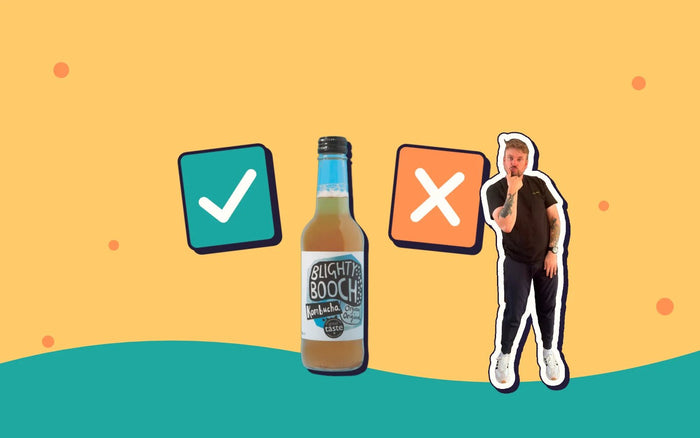
You crack open a cold bottle of kombucha. It's sharp, it's fizzy, it's lovely.
An hour later your stomach is making noises like a Wookiee with a hangover. Sound familiar? You're not alone. It's one of the questions I get asked most in the shop.
Here's the good news. It usually doesn't mean kombucha is bad for you.
It means your gut isn't used to fermented food yet, and you've given it too much, too fast.
The short answer
Bloating, wind, gurgling or a looser trip to the loo are common when you start drinking kombucha. They usually settle as your gut adjusts.
The fix is simple. Start with 50 to 100ml a day with food, build up slowly, and feed your gut plenty of plants while you do it.
If symptoms are severe or don't settle, stop and find out what's going on.
I've been there
Before kombucha was part of my day, I lived with bloating, gas and cramps for years.
When I started, I went slowly. A small glass with lunch. Then a bit more.
Something fermented every day, plus cutting out the booze, turned it round.
At 46, my gut feels better than it has in years, and I've got more energy too. Slow and steady won it.
Why kombucha can upset your stomach at first
Your gut is adjusting. Raw kombucha has live cultures in it. If your gut hasn't seen much fermented food lately, it needs time to get used to the new arrivals.
ZOE, the gut health scientists, say fermented foods and probiotics can make you feel more bloated for a while as your gut adjusts. It's a settling-in period, not a sign to give up.
Too much, too soon. Going from nothing to a full 330ml bottle on an empty stomach is a big jump for any gut.
The fizz. Bubbles are gas, and gas has to go somewhere. Our bloating guide covers this properly.
The tang. Kombucha is naturally acidic, which can niggle if you get heartburn. Our acid reflux guide has more.
Caffeine and sugar. It's brewed from tea, so there's a bit of caffeine. Some brands are sweeter than others too.
Why it's worth sticking with
A gut that struggles with fermented food is often a gut that hasn't been fed well for a while.
ZOE says bloating, gas, diarrhoea and constipation can all be signs of unbalanced gut bacteria.
And the research on fixing that is exciting. A Stanford study found that eating more fermented foods, including kombucha, made gut bacteria more diverse and lowered signs of inflammation.
Then there's plants. A 2026 ZOE and King's College London trial found that eating over 30 different plants changed 57 types of gut bacteria in six weeks.
People also had less wind, constipation and indigestion.
So the goal isn't to avoid kombucha forever. It's to build up slowly while you feed your gut properly.
How much should a beginner drink?
Less than you think. Here's what I tell people in the shop:
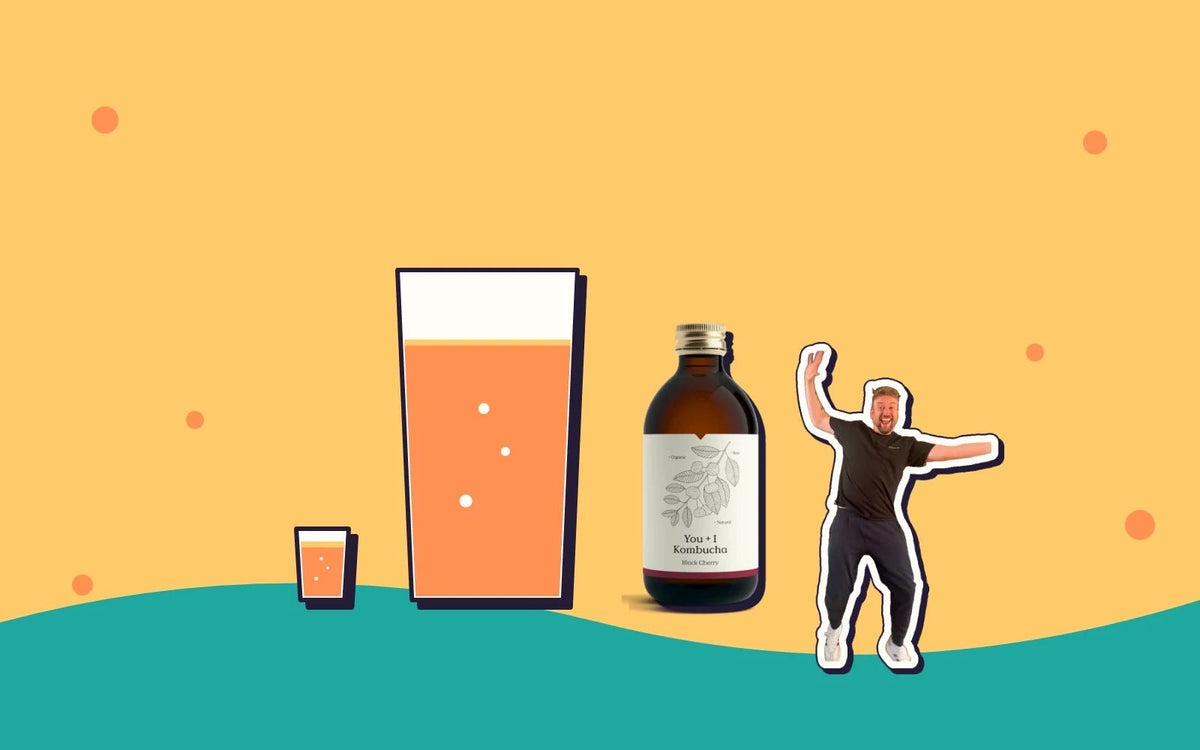
- Days 1 to 4: 50 to 100ml a day, with food.
- Next week: if you feel fine, 100 to 150ml a day.
- After that: build up to a small bottle, 200 to 250ml, as your daily amount.
If your gut complains, drop back to the last amount that felt fine. Hold there for a week, then try again.
A few tricks that help:
- Have it with food, not on an empty stomach.
- Pour it into a glass and let the fizz settle.
- Start with a gentler, lower-sugar style. Here's how to pick one.
- Go raw and unpasteurised if you want the live cultures.
- Drink it earlier in the day if caffeine messes with your sleep.
Build the rest of your gut health too
- Add plants slowly. Work towards ZOE's 30 plants a week. Rush it and you'll have a windy weekend.
- Drink plenty of water as the fibre goes up.
- Try the rest of the 4Ks. Kefir, kimchi and kraut all bring different bacteria to the party. Here's how to stack your 4Ks.
- Cut back on booze and ultra-processed food. They feed the wrong crowd.
- Move every day, and get some strength training in. I lift three times a week.
- Change one thing at a time. Start kombucha, kefir, kimchi and a fibre supplement in the same week and you'll never know what did what.
New to all this? Our kombucha starter guide covers the basics, including raw versus pasteurised.
Can kombucha give you the runs?
It can, usually when someone goes from zero to a big bottle a day. It's normally short-lived and comes down to how much, when, and the caffeine.
Be honest with yourself about the rest of the day too. If you had a kombucha, a takeaway, four coffees and three pints, the kombucha might be getting the blame for the whole gang.
If you think it's the kombucha, take a few days off. Then restart at 50ml with a meal and build up slower.
While things settle, stick to still drinks, as the NHS advises avoiding fizzy ones until it passes.
Who should take more care?
Have a chat with your GP or midwife first if you're pregnant or breastfeeding, have a weakened immune system or liver disease, are managing diabetes, or need to avoid alcohol completely.
Kombucha has a little sugar, caffeine and a trace of alcohol, and homemade brews carry extra risks.
We explain the alcohol bit in is kombucha alcoholic?
When to get it checked
A bit of wind and gurgling while your gut adjusts is normal. Severe pain isn't.
Stop and get checked if you have bad or worsening pain, repeated vomiting, diarrhoea lasting more than a few days, blood in your poo or black poo.
The same goes for weight loss you can't explain, a fever or trouble swallowing. A change in your toilet habits that lasts several weeks needs looking at too.
The bottom line
Most kombucha side effects are about dose and a gut that's still getting used to fermented food.
Start small, have it with food, feed your gut plants, and give it time. It took me a few weeks. It's been worth every sip.
Want a gentle place to start? Our Kombucha Discovery Box has six raw kombuchas to try, or come and chat it through at our Otley shop.
Kevin Gillespie spent the first ten years of his career working on public health campaigns, including national campaigns for NHS London and the Department of Health, and founded Functional Drinks Club in Otley in 2023. This article is general information, not medical advice.