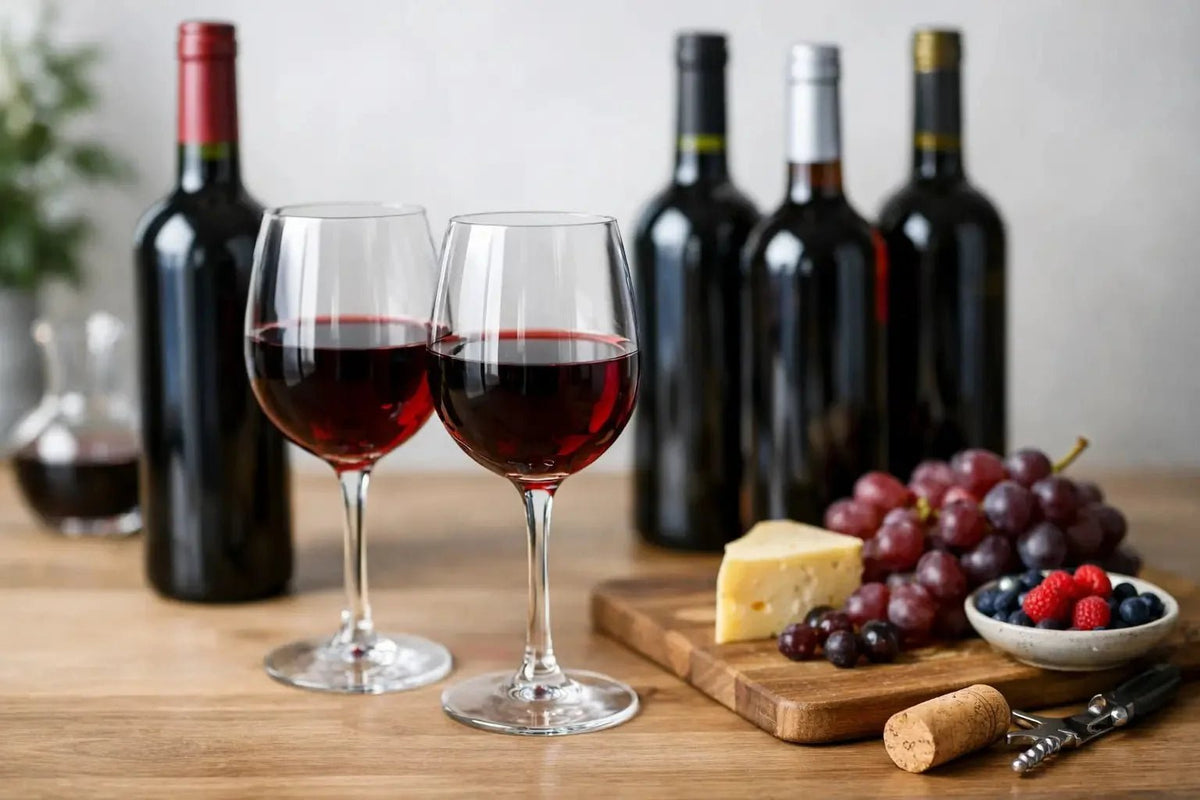
A decent alcohol-free red is one of the hardest things to get right. White wine can lean on freshness. Sparkling wine has bubbles doing some of the heavy lifting. Red has nowhere to hide. It needs body, tannin, dark fruit, acidity and a finish that makes you want another glass. The best non-alcoholic red wines do not pretend to be a full-strength Bordeaux. They bring their own character to the table - and they absolutely should not taste like sweet grape juice in a fancy bottle. Browse our own curated non-alcoholic red wine range, or visit our Otley wine shop to taste before you buy.
For anyone drinking less, taking a break, driving, training, protecting their sleep, or simply bored of fizzy sugar water at dinner, that is excellent news. The category has moved on. Independent producers are treating alcohol-free wine as a proper drink, not an afterthought for January.
What makes a non-alcoholic red actually good?
Most alcohol-free wines begin life as regular wine. It is fermented, developed and then dealcoholised, usually through gentle vacuum distillation or spinning-cone technology. Removing alcohol also removes weight, warmth and some aroma, which explains why so many early attempts felt thin, jammy or oddly sharp.
The better makers build flavour back in through careful grape selection, blending, ageing and balancing. A successful bottle tends to have bright acidity, enough grip to feel wine-like, savoury detail and restrained sweetness. It will not recreate the heat of a 14% red. That is not failure. It is a different drink, and a good one earns its place beside food rather than apologising for what is missing.
Serve it properly, too. Pouring a non-alcoholic red at room temperature can make it feel clumsy. Give most bottles 20 minutes in the fridge, then let them open in the glass. A large wine glass helps. So does ignoring the instinct to pair every alcohol-free drink with crisps alone.
The 11 best non-alcoholic red wines to try
We'll start with the four reds we stock and drink ourselves, then the best of the rest.
1. Miris Blend Cabernet Sauvignon
This is my first pick for a reason. Miris Blend Cabernet Sauvignon comes from the vineyards around Lake Balaton in Hungary and is aged in oak barrels, then the alcohol is removed to leave a proper alcohol-free red, under 0.5% ABV.
Expect blackcurrant, dark plum, a bit of leather and forest floor, with silky tannins and a long, berry-rich finish. It's built for the table, so pour it with a beef stew, a coq au vin or a good cheese board. At £16 a bottle, it's the one I'd stock up on.
2. Zeronimo Century Blend Nr.1
The most patient bottle in the alcohol-free world. Zeronimo Century Blend Nr.1 is a blend of Blaufränkisch, Merlot and Pinot Noir from 70-year-old vines in Austria, aged for two years in French oak and then 18 more in the bottle before the alcohol was gently removed.
It's the world's first 20-year-aged alcohol-free red, and only 2,500 bottles were made. Think cassis, eucalyptus and forest floor, with layers you simply don't find in alcohol-free wine. This is your big-occasion bottle.
3. Jörg Geiger Edition Lamothe
Real Bordeaux, without the alcohol. Jörg Geiger Edition Lamothe is made from Cabernet Sauvignon and Merlot grown on their own vineyards in Bordeaux, gently dealcoholised at low temperature, then lifted with foraged German fruits, herbs and spices.
Dark fruit, structured tannins and a long, elegant finish. It turns up on the menus of some of Europe's best restaurants, and at £16.99 it's a serious red for a Tuesday price.
4. ILEX Saint-Émilion Merlot 2023
This one's close to my heart. I used to buy wine straight from the vineyards in Saint-Émilion, and ILEX is the first alcohol-free wine ever made there, a partnership between Château Franc Mayne and Wild Idol.
It's 100% Merlot from the 2023 vintage, with ripe plum, black cherry, a touch of mocha and soft, velvety tannins. Worth knowing: it's 0.5% ABV rather than 0.0%, and we've only got a handful of bottles, so don't hang about.
5. Oddbird Domaine de la Prade
This is the bottle for people who miss a dry, grown-up red. Made from organically grown southern French grapes and aged before dealcoholisation, it brings blackberry, cherry, gentle spice and a faintly earthy edge. It is not heavy, but it has real structure and a dry finish. Try it with mushroom pasta, lentils or a properly good cheese board.
6. Leitz Eins-Zwei-Zero Pinot Noir
Leitz understands that Pinot Noir should be lifted rather than lumbering. Expect red cherry, cranberry, a little spice and soft tannin, with enough freshness to make it a very flexible dinner bottle. It is one of the easier reds to introduce to wine drinkers who are sceptical about the category.
7. Torres Natureo Syrah
Syrah is a sensible grape for alcohol-free red because it naturally brings dark berry fruit, pepper and a savoury note. Torres Natureo Syrah has a familiar, generous style that suits burgers, grilled aubergine and smoky food. It is less about subtle cellar-door complexity, more about dependable flavour and easy drinking.
8. Edenvale Shiraz
If your usual order is Australian Shiraz, Edenvale is worth a look. It offers plum, blackcurrant and spice in a plush, ripe style. The sweetness is more noticeable than in some of the drier bottles here, so chill it slightly and bring salt, smoke or heat to the plate. Think sticky barbecue tofu, hard cheddar or a bowl of chilli.
9. Pierre Zéro Merlot
Pierre Zéro Merlot sits in the softer, rounder end of the spectrum. There is ripe berry fruit, a touch of vanilla and smooth texture, making it a friendly option for newcomers. It is particularly useful at gatherings where guests have different tastes and nobody wants a lecture about why they are not drinking.
10. Kolonne Null Cuvée Rouge No. 2
Kolonne Null has helped push alcohol-free wine towards a more precise, food-minded style. Its Cuvée Rouge No. 2 brings darker fruit, herbal savouriness and a firmer shape than many supermarket alternatives. This is one to reach for when you want to sit down, eat slowly and feel like you have chosen a real adult drink.
11. Van Hunks Alcohol-Free Red Blend
For those who prefer richer, warmer flavours, Van Hunks offers dark fruit, gentle oak-like spice and an easy, rounded feel. It is a good match for charred vegetables, smoky bean dishes and wintery suppers. Give it a light chill to sharpen the fruit and keep the finish fresh.
Bonus pick: raw kombucha, the red wine alternative nobody expects
Here's the wildcard. If you've tried alcohol-free reds and still miss the depth, try raw, unpasteurised kombucha instead. It's how I replaced my evening glass of wine.
Proper kombucha brings what a lot of alcohol-free wine is missing: acidity, tannin from the tea, real complexity and a gentle fizz, plus live cultures for your gut. Poured into a wine glass with dinner, it feels like an occasion, not a compromise.
Our Kombucha Wine Alternative Box is the easiest way in. It's six raw kombuchas from six independent UK makers, each picked to hold its own in a wine glass, all for £25.
Choose by your usual red, not by the label
The fastest route to disappointment is buying by claims alone. “Award-winning”, “zero”, and “vegan” may matter, but they do not tell you whether the wine suits your palate. Start with the red wine you normally enjoy.
If you like Pinot Noir, look for lighter-bodied bottles with red cherry, cranberry and gentle spice - Leitz is a reliable place to begin. If you love a Cabernet, start with Miris Blend. If you reach for Merlot, try Pierre Zéro for softer, rounder fruit, or go all out with ILEX from Saint-Émilion. If Syrah, Shiraz or Malbec is your comfort zone, choose bolder, darker styles such as Torres Natureo, Edenvale or Van Hunks.
Dryness matters as much as grape variety. Some alcohol-free reds use a little grape must to restore mouthfeel after dealcoholisation. That can be effective, but it can also leave a sweeter finish than regular wine drinkers expect. A dry, savoury bottle such as Oddbird or Kolonne Null may feel more convincing with dinner. A fruitier red may be exactly right at a party, lightly chilled with snacks.
Food is where alcohol-free reds earn their keep
A well-chosen bottle can hold its own with food, but the pairing rules shift slightly. Alcohol normally brings richness and heat, so alcohol-free red often benefits from dishes with salt, umami, smoke, herbs and texture. Mushrooms, roast squash, lentils, grilled halloumi, olives, tomato sauces and mature cheese all give it something to work against.
With spicy food, avoid the driest, most tannic-tasting styles. A softer, fruitier red is usually kinder to chilli. For Sunday lunch, a medium-bodied Merlot-style bottle makes more sense than a featherlight Pinot. And for a summer barbecue, lightly chilled Syrah or Shiraz can be a revelation. No warm, flat glass required.
There is also no rule saying red must be your only alcohol-free choice at dinner. A tart kombucha can be brilliant with rich food, while a complex alcohol-free beer may suit a curry better than any wine. The point is choice. Do not settle for supermarket boring just because you have decided to skip the booze.
How to read the label without being fooled
The front of the bottle sells a mood. Turn it round. If it says "dealcoholised" or "alcohol-removed" wine, it started life as real wine, which is a promising start.
If the wording leans on "grape drink" or "flavourings", expect something further from proper wine. Check the sugar too. Lower usually means drier and better with food, while higher suits people who like a plush, fruity glass. Just buy it on purpose.
A better bottle is worth seeking out
Alcohol-free red is not a category for blind faith. Some bottles are still too sweet, too thin or too close to cordial. But the good ones offer ritual, flavour and a proper sense of occasion without the alcohol tax on tomorrow morning.
Start with the style you already love, serve it with food, and keep an open mind about what the drink is rather than what it is not. That is where the best discoveries happen - one seriously good glass at a time.