Coffee is the first thing a lot of us reach for, and for most of us it's the drink we never really think about. We worry about what's in our booze, we read the labels on our kombucha, and then we pour whatever's on offer into a mug and hope for the best.
I'm Kev. I run Functional Drinks Club, and if it's on our shelf, we drink it ourselves. So when we decided to add a coffee to the range, we didn't just pick the cheapest beans with a nice bag. We spent a while asking a simple question: why does one cup of coffee leave you feeling bright, and another leaves you bloated, jittery and running for the loo?
The answer isn't really about caffeine. It's about how clean the coffee is and how it was grown and roasted.
Why your everyday coffee can sit badly
If your morning cup regularly leaves you with a churning stomach or a bit of reflux, the coffee usually isn't the villain on its own. A few things usually are.
- Roast level. Very dark roasts are roasted right to the edge. They can be harsher on an already sensitive stomach and taste more of char than of coffee.
- Bean quality. Cheap blends often mix in lower-grade, older or imperfectly stored beans. Stale oils and mould-risked beans are not what you want to be drinking every morning.
- Processing and freshness. Coffee that's been sat in a warehouse for a year is a very different drink to coffee roasted weeks ago.
- How you drink it. A triple-shot on an empty stomach, loaded with sugar and syrup, is a lot for your gut to deal with before breakfast.
None of that means you have to give up coffee. It means the coffee you choose matters more than most of us assume.
What "clean" coffee actually means
When we say clean, we mean a few concrete things rather than a marketing buzzword.
- Organic growing. Organic coffee is grown without a long list of synthetic pesticides, and the beans are usually processed with more care.
- A high-antioxidant profile. Coffee is one of the richest everyday sources of antioxidants in a typical diet. A gentler roast preserves more of those compounds instead of burning them away.
- Transparency about origin and roast. You should be able to tell where your beans come from and when they were roasted.
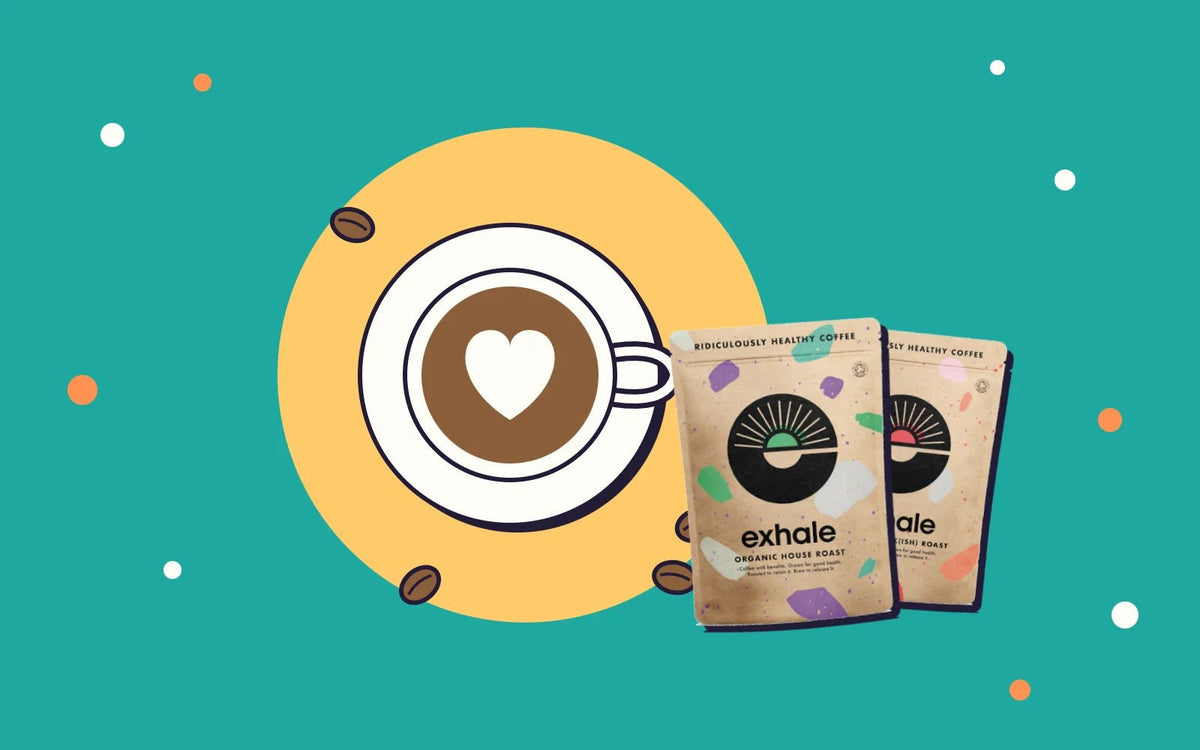
That's the thinking behind our Exhale Organic House Roast. It's an organic house roast chosen for a clean, high-antioxidant profile, so it's a cup that does its job without feeling like it's fighting your gut.
Everyday coffee vs a clean, high-antioxidant roast
Here's the honest comparison, because that's the whole point of this piece.
| What you're comparing | Everyday supermarket coffee | A clean, high-antioxidant organic roast |
|---|---|---|
| Beans | Often a low-grade blend, sometimes old or poorly stored | Organic, selected for quality and freshness |
| Roast | Frequently very dark, roasted for consistency over flavour | Balanced roast that keeps more of the bean's natural compounds |
| Antioxidants | Reduced by heavy roasting and long storage | Preserved by a gentler roast and fresher beans |
| How it tends to feel | Can be harsh, jittery, hard on a sensitive stomach | Smoother, steadier, easier on the gut for most people |
| What you actually know about it | Rarely much | Origin and roast you can ask about |
Two things are worth saying plainly. First, everyone's gut is different. Some people find any coffee irritates their reflux, no matter how good it is, and if that's you, it's worth talking to your GP rather than powering through. Second, coffee is not a treatment. It's a daily drink, and the aim is simply for it to be a good one that doesn't work against you.
Where coffee fits in a gut-friendly routine
If you're already cutting back on alcohol and thinking about your digestion, coffee is part of the same picture. A few habits help.
- Drink it with or after food rather than on a completely empty stomach, especially if you're prone to reflux.
- Keep it simple. A clean cup needs no sugar syrup to taste good.
- Watch your total. A couple of cups is plenty for most people; six is a different story.
- Notice how you feel. If a particular roast leaves you rough and another doesn't, that's useful information, not fussiness.
Common questions
Does coffee damage your gut bacteria? Coffee actually contains compounds that can feed beneficial gut bacteria, and it's linked with a more diverse microbiome in some studies. The catch is how you drink it - a clean roast with no sugar is a very different thing to a syrupy, milky monster.
Is dark roast worse for your stomach than light roast? For many people, yes. Lighter and medium roasts tend to be less harsh because they aren't roasted to the edge. If coffee normally bites back, try a gentler roast before you give up.
Can I drink coffee if I have acid reflux? Plenty of people with reflux still enjoy coffee, usually by drinking it with food, keeping to a moderate amount, and choosing a cleaner roast. If a single cup sets you off, speak to your GP.
What makes organic coffee different? No long list of synthetic pesticides in the growing, and typically more careful processing. It's one of those choices where "quality ingredients over convenience" really does show up in the cup.
The bottom line
Coffee and gut health aren't enemies. The trick is choosing a cup that's clean, freshly roasted and worth drinking on its own - rather than the cheapest bag on the shelf that leaves you feeling worse for the rest of the morning.
That's why Exhale Organic House Roast is on our shelf. It's the coffee we drink ourselves, chosen for a clean, high-antioxidant profile, and it earns its place next to the kombucha the same way: real ingredients, no hype, no nasties.
Have a look at the roast, and if you're building a gut-friendly routine, sip it alongside a live kombucha rather than in place of one. Built from the gut up.