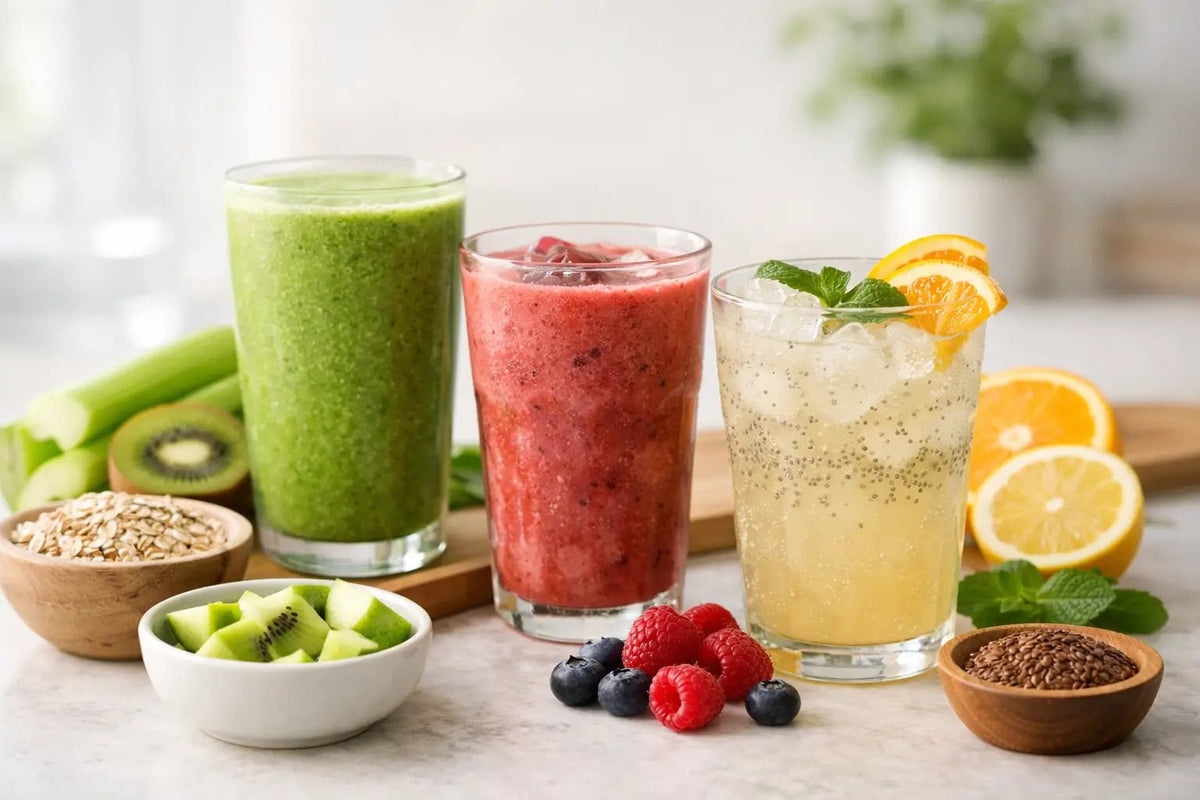
A drink that claims to be good for your gut but tastes like sweetened cardboard is not a functional drink. It is a punishment in a bottle. The best fibre drinks for adults earn a place in your fridge because they bring proper flavour, a satisfying ritual and a useful nutritional boost - not because the label shouts the loudest.
For people drinking less alcohol, building a more gut-conscious routine or simply bored stiff of fizzy sugar water, fibre can be a smart thing to look for. But it is not a magic word. Here is how to separate genuinely useful drinks from wellness-washed nonsense.
What fibre drinks for adults are actually for
Dietary fibre is the part of plant foods that is not digested in the small intestine. Different fibres behave differently, but broadly speaking, fibre helps support normal digestion and contributes to a varied diet that keeps your gut microbes well fed. Most adults in the UK are not getting enough of it, with the general recommendation sitting at 30g per day.
That does not mean a single can of sparkling something will fix a low-fibre diet. Vegetables, pulses, fruit, wholegrains, nuts and seeds should still do the heavy lifting. A fibre drink is best viewed as a useful addition, particularly when it replaces a less interesting soft drink or an evening alcoholic drink you did not really fancy.
There is another practical point. Adults tend to stick with habits that feel good. A flavour-led drink before dinner, at your desk or poured into a decent glass on a Friday night can make healthier choices feel less like a rule and more like your new normal.
Not all added fibre works in the same way
You do not need a nutrition degree to choose well, but a little label reading helps. Fibre in drinks often comes from ingredients such as chicory root fibre, inulin, acacia fibre, resistant dextrin or fruit and vegetable extracts. These can be useful, yet your own tolerance matters more than a flashy front-of-pack claim.
Prebiotic fibres can be brilliant - or a bit much
Inulin and chicory root fibre are popular because they are prebiotic fibres. In simple terms, they can be fermented by beneficial gut bacteria. That is why they turn up in plenty of gut-health drinks, and why they are the backbone of standalone blends like our own Happy Gut Super Pre-Biotic Blend, which pairs chicory root inulin with milled hemp seed and can be stirred straight into water or a drink you already enjoy.
The trade-off is that fermentable fibre can cause wind, bloating or stomach discomfort for some people, especially if they go from very little fibre to a large serving overnight. If you have IBS or know that certain fermentable foods do not agree with you, start with a small serving and see how you feel. More is not automatically better.
Acacia fibre is often considered gentler, while resistant dextrin may suit some people well too. There is no universal winner. Your gut is not a group chat with one shared opinion.
Fibre content is only half the label
A drink can contain added fibre and still be packed with sugar, artificial-tasting sweeteners or a list of ingredients that leaves you none the wiser. Look at the whole serve: how much fibre does it provide, how much sugar is in it, and would you honestly enjoy drinking it regularly?
A modest amount of fibre in a beautifully made drink can be more valuable than a huge dose in something you force down once, then abandon at the back of the cupboard. Consistency beats performative wellness every time.
Where kombucha fits into a gut-conscious routine
Kombucha is often swept into the same conversation as high-fibre wellness drinks, but they are not necessarily the same thing. Traditional kombucha is fermented tea. It may contain live cultures depending on how it is made, handled and stored, but it is not usually a significant source of dietary fibre unless fibre has been deliberately added. Browse our own kombucha collection for UK-wide delivery.
That does not make it less interesting. Good kombucha brings acidity, tannin, fruit, botanicals and a grown-up complexity that standard soft drinks rarely manage. It can be a sharp, refreshing alternative for people who want the ceremony of a drink without defaulting to alcohol.
The sensible approach is to stop expecting one bottle to do every job. You might choose a fibre-forward drink as part of your daytime routine, then reach for a dry, small-batch kombucha with dinner because it has the bite and depth you actually want. Both can belong in a better drinks cupboard.
How to choose a drink you will want again
Start with the occasion, not the claim. Are you after something for a mid-afternoon slump, a breakfast shortcut, a post-gym refreshment or a proper alcohol-free serve for dinner? A thick fibre smoothie and a sparkling botanical drink have very different jobs.
For everyday drinking, favour products with a clear ingredient list and flavour that comes from recognisable ingredients: tea, fruit, herbs, spices, juices and botanicals. A little sweetness is not a moral failure, but a drink should not need a sugar overload to be drinkable.
Pay attention to serving size too. Some labels make the fibre number look impressive until you realise it applies to two bottles or a full-size carton. Equally, do not dismiss a drink that provides a smaller amount. It may fit neatly alongside meals that already contain fibre, such as porridge with berries, a lentil salad or toast with nut butter.
If you are new to higher-fibre drinks, introduce them gradually and drink enough water across the day. Fibre and hydration work better as a pair. Dramatically ramping up fibre while barely drinking anything is a fast route to feeling worse, not better.
The flavour test matters more than wellness marketing
There is a particular kind of functional drink that sounds impressive and tastes like it was designed by committee. A little fruit flavour, an aggressive sweetener, vague promises about balance, then a finish that lingers far longer than it should. No thanks.
Premium alcohol-free and functional drinks have moved on. The makers worth paying attention to understand bitterness, acidity, body and aroma. They use tea tannins, ginger warmth, berry sharpness, floral notes and fermentation to build something with character. That complexity matters when you are trying to replace the feeling of a beer, glass of wine or G&T rather than merely avoid it.
This is where independent producers tend to shine. They are often making drinks for people who care about what is in the glass, not just what has been taken out. At Functional Drinks Club, that is the point of curating beyond supermarket boring: give people a reason to choose the better drink, not a lecture about why they should. Visit our Otley kombucha shop to see the range in person.
A few smart ways to make fibre easier
The most effective approach is pleasantly unglamorous: add fibre in ways that suit the life you already lead. Have a fibre-containing drink with breakfast if mornings are rushed. Keep a sparkling option in the fridge for the moment you would usually crack open a beer. Pair a fermented tea drink with a meal where you want refreshment without alcohol.
You can also use drinks as a nudge towards broader changes. If a fruity, lightly sparkling fibre drink replaces a daily fizzy drink, that is useful. If it reminds you to eat a proper lunch with beans, grains or vegetables rather than surviving on biscuits, even better. It is the pattern, not the perfect product, that counts.
Be more cautious if you have a diagnosed digestive condition, are following a medically advised diet or find that added fibres reliably trigger symptoms. A health professional can help you work out what is appropriate for you. The aim is to support your gut, not pick a fight with it.
The right drink should make your day taste better as well as fit your goals. Choose one with a fibre level you tolerate, ingredients you trust and enough flavour to make you look forward to the next glass. That is a far better standard than settling for a worthy drink you never actually want to drink.