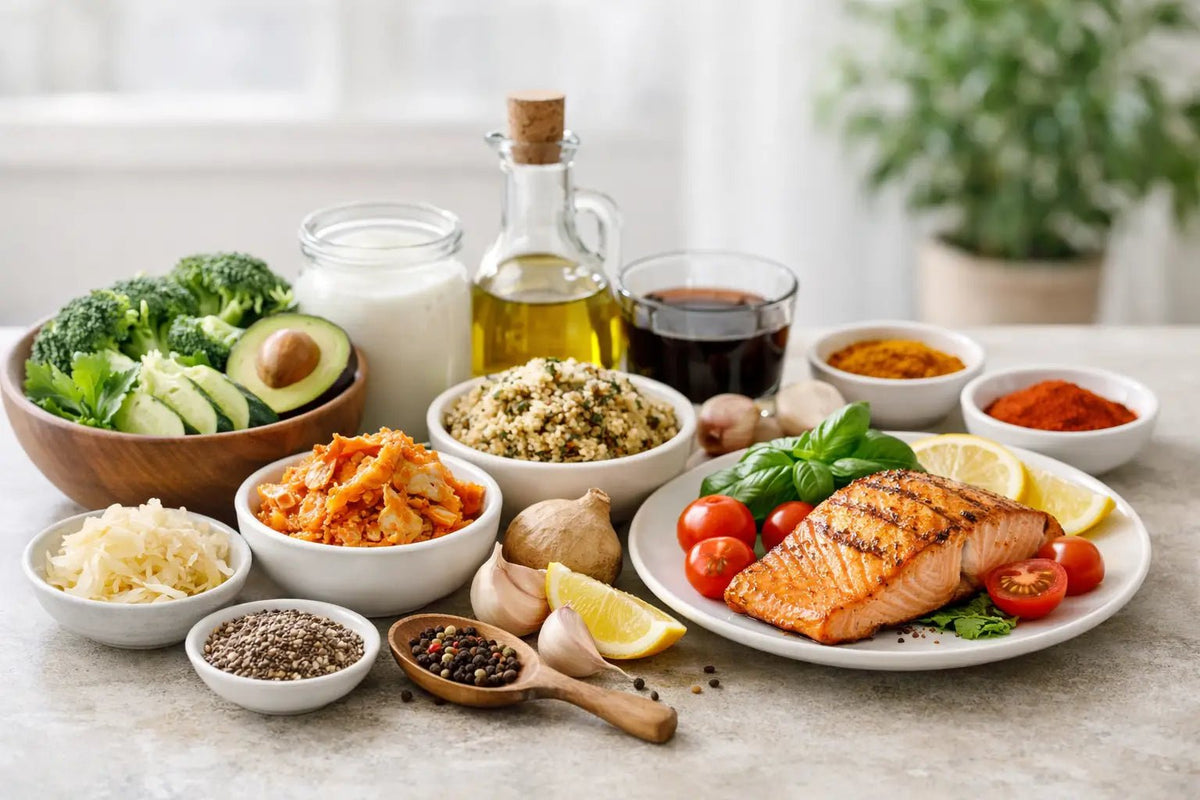
Your gut does not need a punishing reset, a cupboard full of beige powders or another meal plan that makes eating feel like admin. If you are working out how to support gut health, start with what you do repeatedly: the food on your plate, the drinks in your hand, your sleep, stress and how much alcohol is in the weekly mix.
The gut is home to a huge, varied community of microbes. They help break down parts of food we cannot digest ourselves and produce compounds that support the gut lining and wider health. But there is no single ‘perfect’ microbiome, no magic kombucha, and no prize for changing everything by Monday. The good stuff is usually more ordinary - and more delicious - than that.
How to support gut health with more variety
A healthier gut often starts with a broader diet, not a stricter one. Different gut microbes thrive on different plant foods, particularly the fibres and plant compounds that reach the large intestine. If your usual shop is built around the same five vegetables, the same cereal and the same sad desk lunch, variety is the most useful place to shake things up.
Aim to eat a wide range of plants across the week: vegetables, fruit, beans, lentils, wholegrains, nuts, seeds, herbs and spices all count. This is not a command to buy 30 fresh ingredients in one heroic supermarket sweep. Frozen berries, tinned chickpeas, jarred butter beans, oats and bags of mixed vegetables make this much easier and often cheaper.
Small switches add up. Put mixed seeds on porridge, make a lentil-heavy chilli, add a second vegetable to your evening meal, or rotate your usual fruit. A bowl of yoghurt with berries, oats and nuts gives your gut far more to work with than a grab-and-go pastry, while still feeling like breakfast rather than a wellness lecture.
If you currently eat very little fibre, go slowly. A sudden leap from white toast to mountains of beans can mean bloating, wind and a fast exit from your own good intentions. Add one fibre-rich food at a time, drink enough water and give your digestion a couple of weeks to adjust. Persistent pain, major changes in bowel habits, blood in your stool or unexplained weight loss are reasons to speak to a GP, not to keep experimenting with supplements.
Fermented drinks: useful, not miraculous
Fermented foods and drinks have earned their place at the table, but the marketing can get a bit carried away. Kombucha, live yoghurt, kefir, kimchi and sauerkraut may introduce live cultures, depending on how they are made and stored. They can be a tasty way to bring more fermented foods into your routine. Browse our own kombucha collection for UK-wide delivery.
That does not mean every fermented drink has the same microbes, the same amount of them, or the same effect on every person. Pasteurisation can reduce or remove live cultures, and a fizzy drink with the word ‘fermented’ on the label is not automatically a gut-health halo. Check the label, pay attention to sugar content, and choose producers who are clear about what is in the bottle.
Kombucha is particularly useful for people who are bored rigid by water and trying to cut down on alcohol or sugary soft drinks. Its acidity, tannin and gentle funk give you a proper adult drink ritual: something to pour into a decent glass, pair with food and actually look forward to. It is not medicine. It is a more interesting choice than another pint or another can of fluorescent pop.
Start with a small serving if fermented drinks are new to you, especially if you have a sensitive stomach. Some people love them. Others find carbonation or acidity uncomfortable. It depends on the person, the product and the amount. Zero compromise on flavour does not mean ignoring what your body is telling you.
Give your gut a better daily rhythm
Your gut does not exist separately from the rest of you. Sleep, movement, stress and alcohol can all affect digestion and the microbial ecosystem living there. You do not need to become a sunrise-running, cold-plunging monk. You do need a few habits that make regularity more likely.
Regular meals can help if your day currently swings between skipping breakfast, surviving on coffee and eating a massive dinner at 10pm. A short walk after a meal supports digestion and is far more realistic than an intense workout programme you will resent by Thursday. Sleep matters too: a rough night can make you reach for quick sugar, more caffeine and less balanced choices the next day.
Stress is not just ‘in your head’. The gut and brain are in constant conversation, which is why nerves can show up as cramps, nausea, constipation or an urgent need to locate the nearest loo. You cannot breathe your way out of every difficult week, but slowing down over meals, taking a walk, protecting your evening wind-down and talking to someone when things are heavy can all help.
Rethink alcohol without making life smaller
For plenty of people, supporting gut health means looking honestly at alcohol. Heavy or frequent drinking can irritate the digestive system, disturb sleep and make it harder to stick to the habits that help you feel well. The answer does not have to be an all-or-nothing identity change, unless that is what works for you.
Try choosing a few alcohol-free nights each week, alternating alcoholic drinks with water or a proper non-alcoholic option, or making your first drink of the evening alcohol-free. The key is replacing the ritual, not simply removing it. A complex alcohol-free beer, a sharp kombucha or a grown-up sparkling botanical drink can keep the social bit intact without making you feel as though you have been handed the children’s menu.
This is where better drinks genuinely matter. If the alternative tastes thin, overly sweet or vaguely like disappointment, it is hard to make it a habit. Independent makers are pushing far beyond supermarket boring, with layered acidity, tea, botanicals, fruit and fermentation doing the work that alcohol once did.
The gut-health habits worth keeping
There is no need to turn every meal into a microbiome project. Build a base that is easy to repeat: eat more varied plant foods, increase fibre gradually, include fermented foods or drinks if you enjoy them, and make alcohol-free choices that still feel generous. Then protect the basics - sleep, movement, water and enough time to eat without scrolling through your inbox.
Be sceptical of anyone promising to ‘heal your gut’ in seven days. Digestive symptoms have many causes, and restrictive diets can make food feel stressful or cut out useful sources of fibre. If you have diagnosed bowel disease, coeliac disease, recurrent symptoms, are immunocompromised, pregnant, or take regular medication, get personalised advice from a qualified clinician or dietitian before making major changes or taking probiotic supplements.
Functional Drinks Club exists because a better routine should not taste like deprivation. Make one change this week that you would happily keep for the next six months - perhaps a bean-based lunch, an earlier night, or a fridge stocked with fermented drinks you actually want to open. Visit our Otley shop to see the full range. Your gut is more likely to benefit from that kind of consistency than from any dramatic health kick.